Single-use has had its day.
On 12 August 2026 the PPWR takes effect — the new European packaging regulation. Less packaging, less cardboard, more reuse. Van Vliet & Newwen make you PPWR-ready today.
From this date the PPWR applies directly across the entire EU — and the clock starts ticking towards the 2030 requirements.
For everyone who uses packaging —
HorticultureE-commerceRetailMovingFoodIndustryLogistics& moreWhat changes — and when?
The PPWR (Packaging & Packaging Waste Regulation) is no longer a directive but a regulation: one set of rules that applies directly and uniformly across the entire EU. These are the key points.
Everything recyclable
By 2030 virtually all packaging placed on the market must be recyclable according to fixed design-for-recycling criteria.
Less empty space
A maximum of 50% empty space in shipping, e-commerce and grouped packaging. Unnecessary layers will no longer be permitted.
Reuse mandatory
Binding reuse targets for transport and grouped packaging. Reusable becomes the norm; single-use becomes the exception.
Recycled content required
New plastic packaging must contain a minimum percentage of recycled material, increasing towards 2030 and 2040.
Banned packaging
Certain single-use and very lightweight plastic packaging formats will disappear from the market entirely.
Labels & EPR
Harmonised labelling and extended producer responsibility: report and pay for what you place on the market.
From 12 August to 2040
The PPWR rolls out in phases. These are the key milestones — with the date each requirement takes effect.
PPWR enters into force
The regulation applies directly across the entire EU and the core obligations become enforceable.
The tipping point
All packaging must be recyclable (grade A, B or C). Maximum 50% empty space in transport, grouped and e-commerce packaging. First single-use formats banned. Mandatory recycled content in plastics. 70% of all packaging waste recycled.
autorenew Reuse target: 40% transport packaging · 10% grouped packagingRecyclable in practice
Packaging must not only be designed for recycling but also actually recycled at scale.
Stricter requirements
Recyclability requirements are tightened: only the best-performing packaging (grade A or B) will remain permitted.
Fully circular
Recycled content and reuse targets are significantly increased.
autorenew Aim (best-effort): 70% transport · 25% grouped packagingBased on the official EUR-Lex summary and the full regulation (EU) 2025/40. Exact percentages and exceptions are set out in the legislative text and annexes.
Cardboard becomes a liability. Reuse becomes a competitive edge.
Those who stick with cardboard and single-use will face rising costs and mandatory requirements. Those who switch now will be ready — and will have a stronger sustainability story to tell.
Sticking with cardboard?
- remove Rising EPR levies on single-use packaging
- remove Mandatory recycled content and design-for-recycling on your cardboard
- remove The 50% empty-space rule forces you to rethink your packaging
- remove Administration and reporting burdens that keep growing
- remove Every year of delay makes the 2030 transition more costly
Switching to reusable?
- check You meet the reuse targets the PPWR mandates
- check Less waste, less CO₂, lower packaging costs per cycle
- check One system that already meets what 2030 requires
- check A demonstrable, data-backed sustainability story
- check Peace of mind: no more annual surprises from Brussels
Reusable transport ahead of the law.
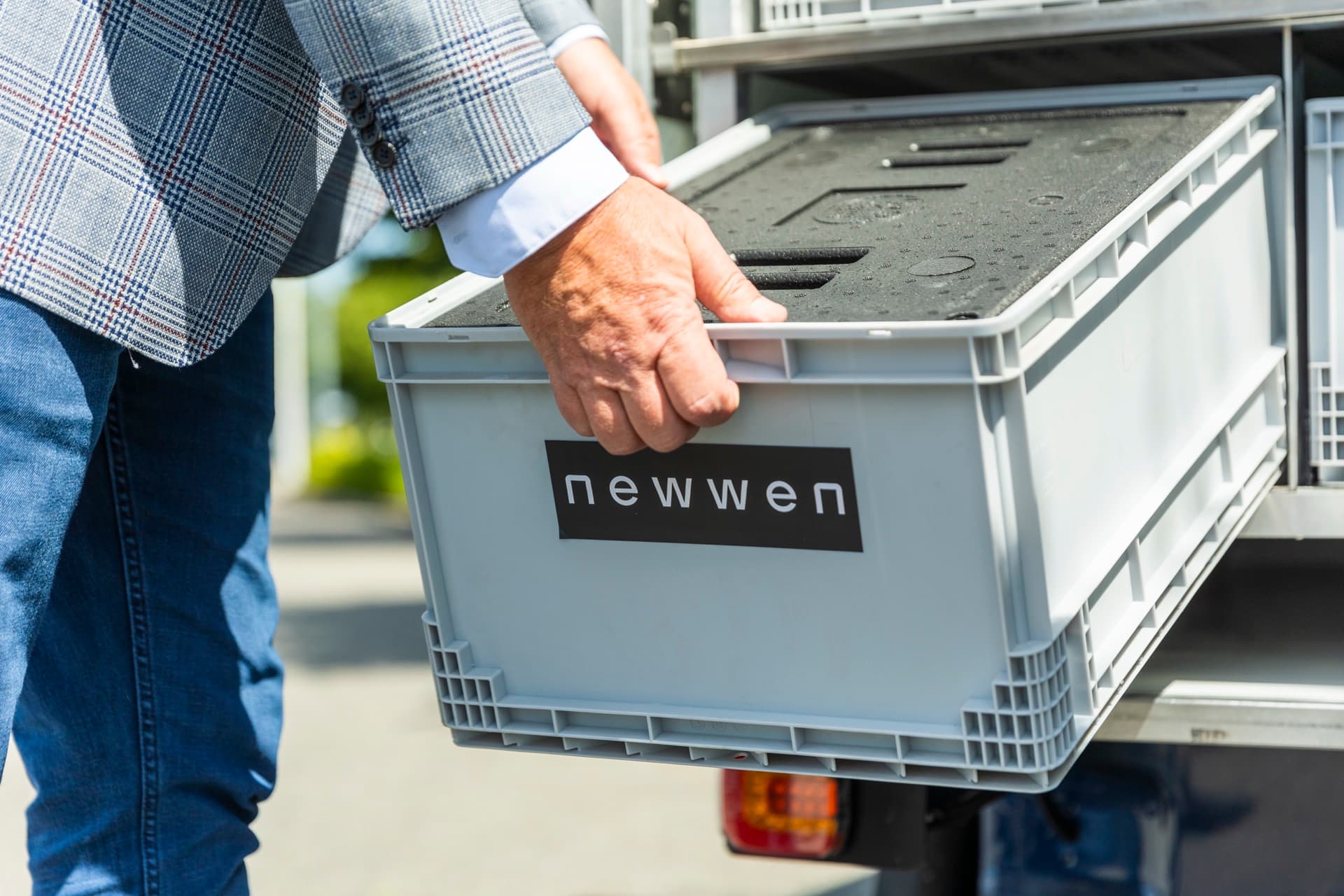
From reusable flower boxes with track & trace to custom load carriers: concrete solutions that replace cardboard and last for decades. Two brands, one mission.
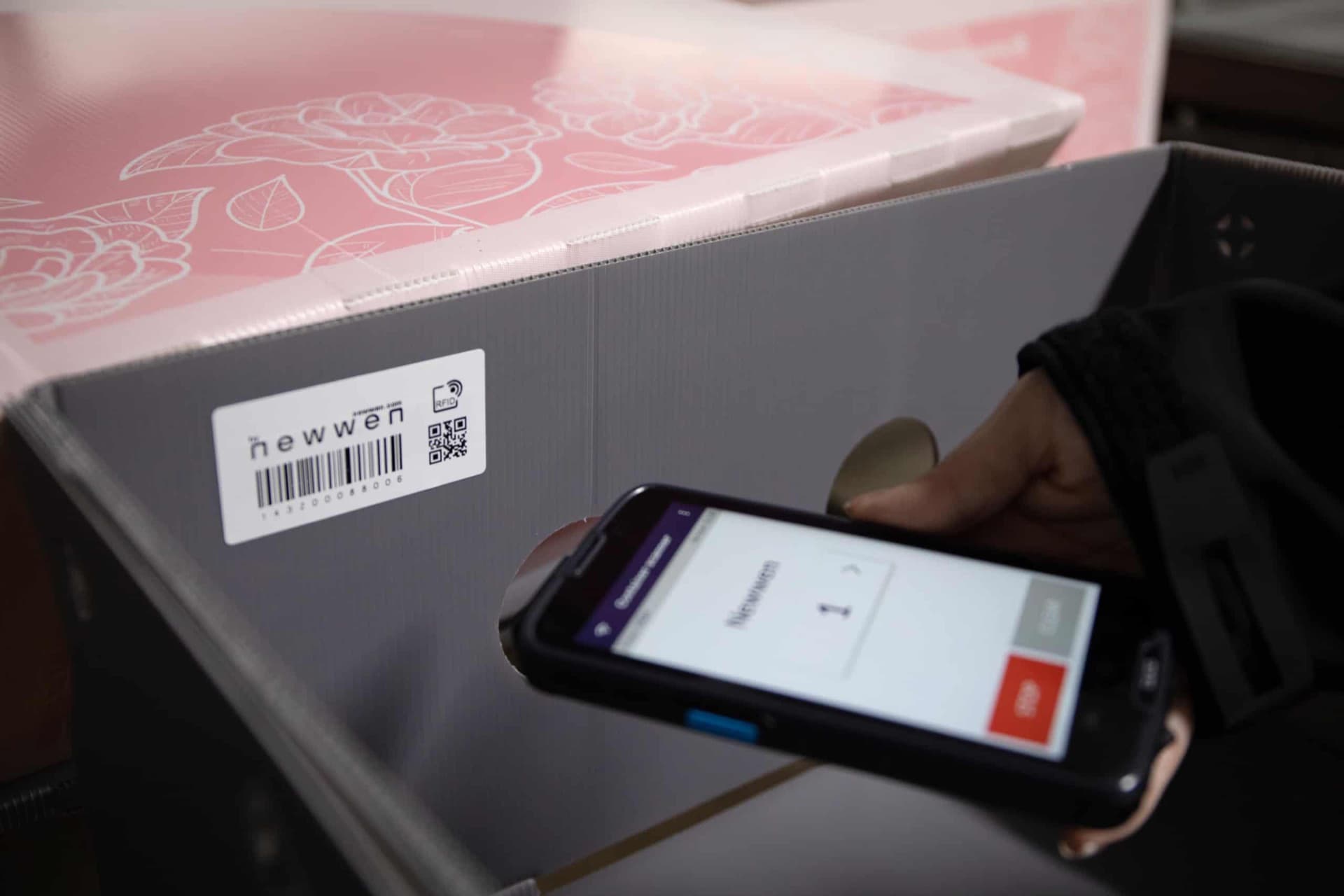
Flower boxes with RFID
Reusable, traceable export boxes for the floriculture sector.
Read the case: Hoek Flowers arrow_forward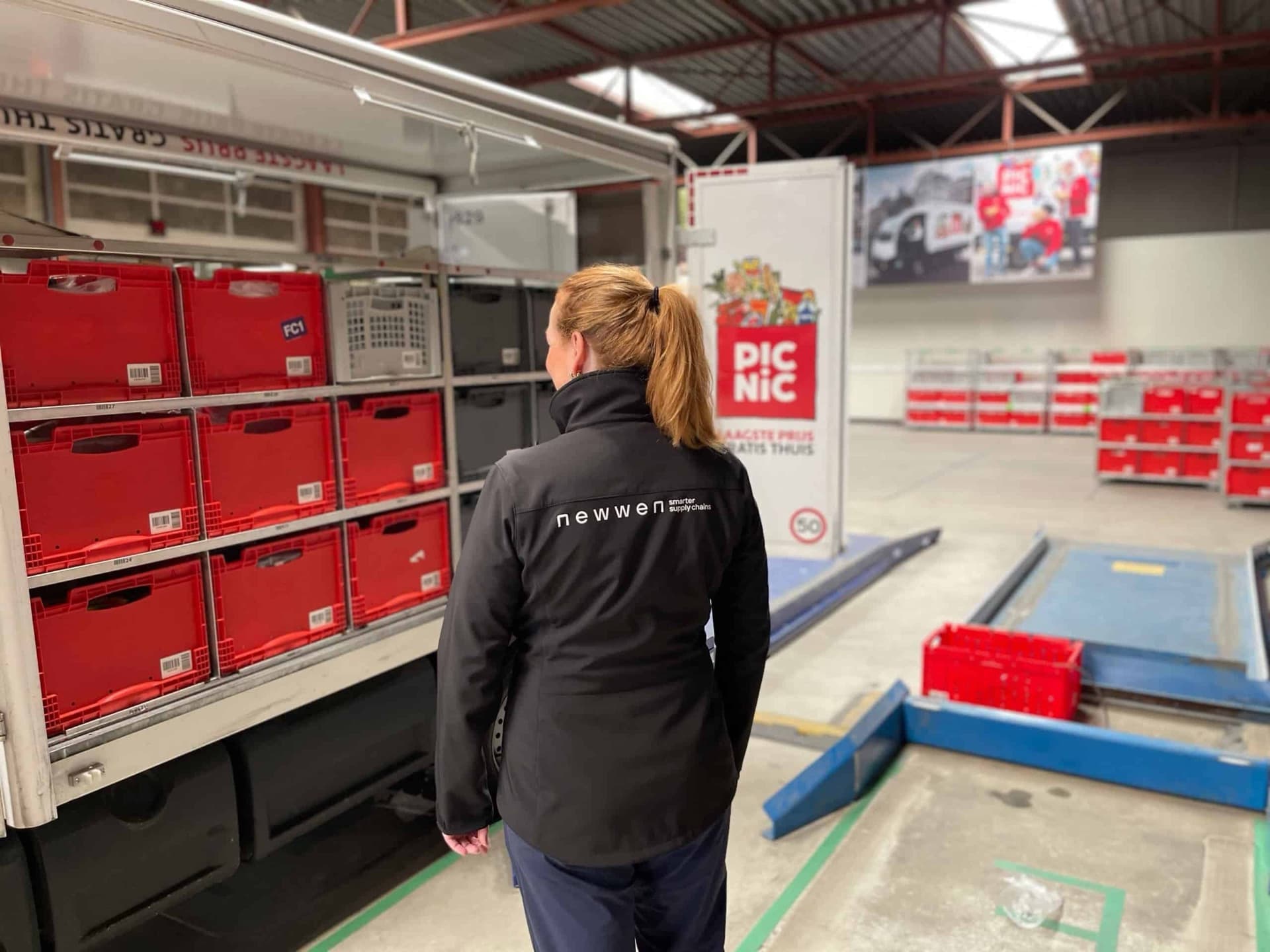
Custom load carriers
Closed-loop carriers for e-fulfilment and retail.
Read the case: Picnic arrow_forwardWe develop it ourselves. From drawing board to circulation.
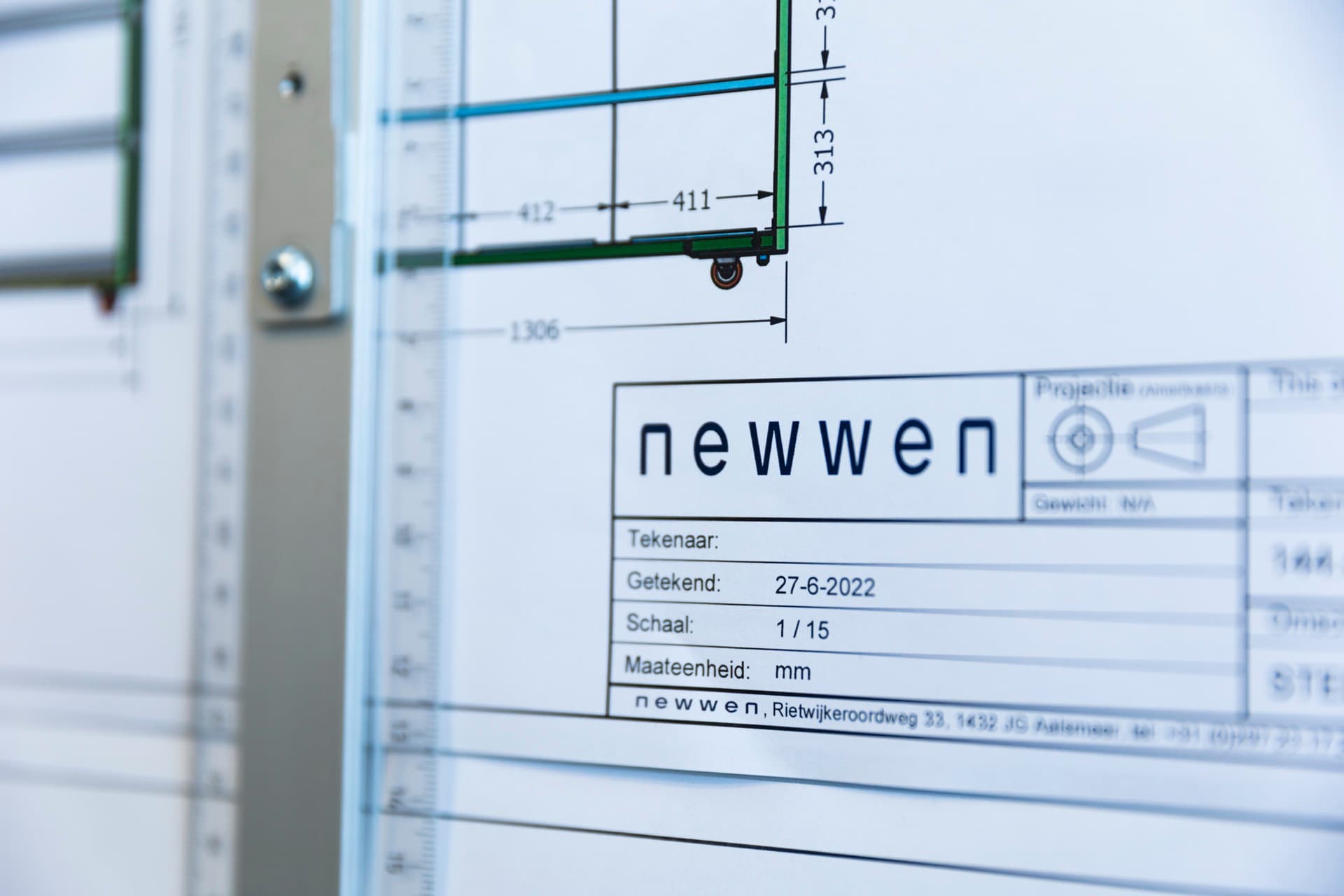
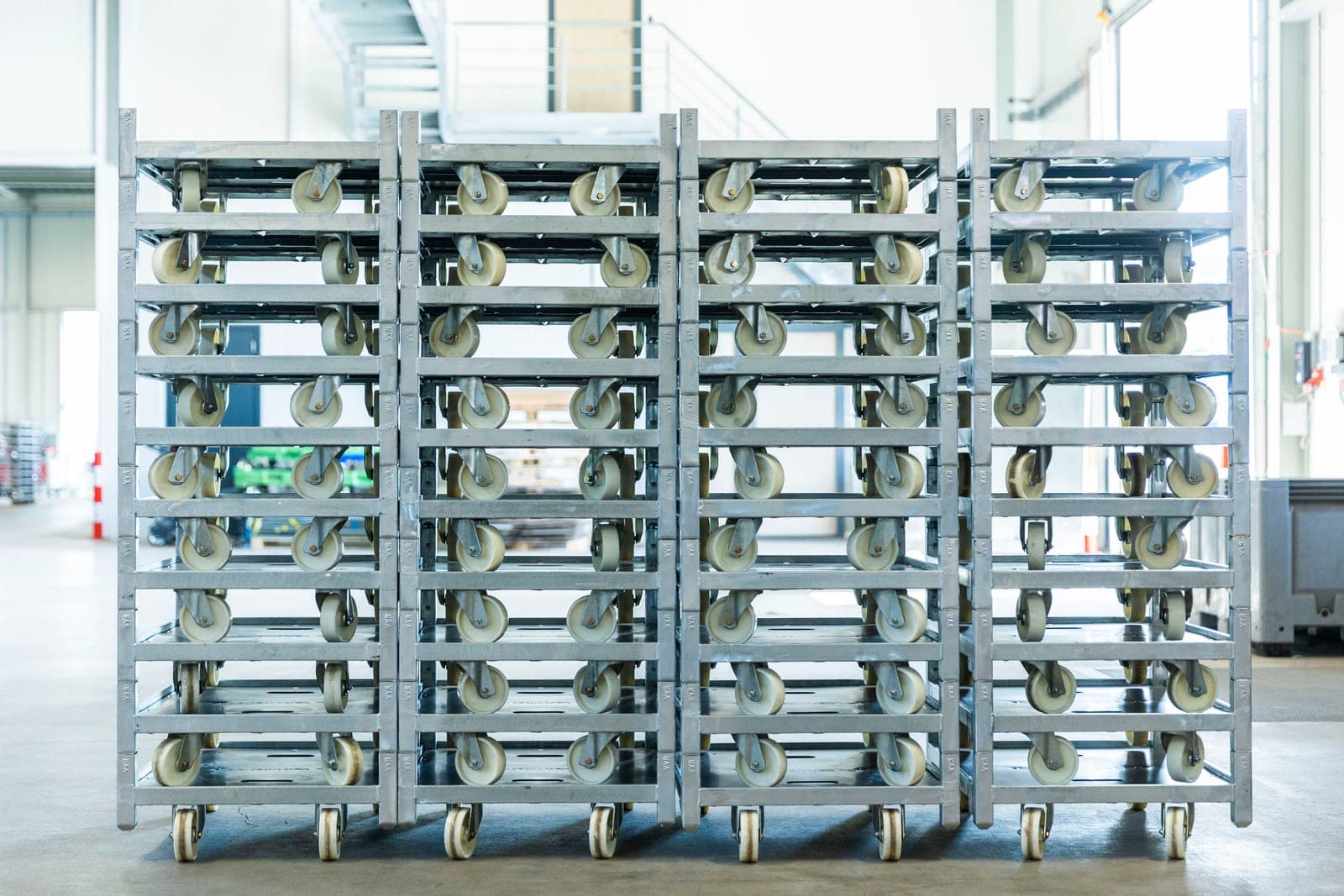
Nothing off the shelf. Our own engineers design reusable carriers, crates and boxes tailored to your supply chain — drawn, tested and optimised for hundreds of cycles.
- draw In-house engineering & product development
- tune Custom-built for your products and processes
- autorenew Designed for return, cleaning and reuse


Do you use packaging? Then the PPWR affects you.
Flowers, parcels, furniture, food or medical products — the law applies to every sector. The core story is universal; the gains per sector are concrete.
Dive into the PPWR
Practical, factual articles explaining what the PPWR means for your sector — and how to prepare today.
PPWR pause button for shipping, service and primary production packaging
Verpact has activated a temporary pause on shipping, service and primary production packaging under the PPWR. What does the stand-still mean, and why is retroactive effect the catch?
PPWR for e-commerce & retail: what the packaging law means for your shipping packaging
What the PPWR means for online shops and retailers: the 50% empty-space rule, why cardboard gets more expensive, reuse targets and concrete steps toward 2030.
PPWR and floriculture: what changes for flower and plant exports?
What does the PPWR (Regulation 2025/40) mean for floriculture? From export boxes to trays and trolleys: here is what changes for flower and plant exports.
PPWR questions, answered briefly
Based on the official regulation (EU) 2025/40 — short, factual, and clear about what applies when.
The PPWR (Packaging and Packaging Waste Regulation, Regulation (EU) 2025/40) is the new EU packaging law. As a regulation it applies directly in every member state without national transposition, setting requirements across the full packaging lifecycle: design, materials, reuse and recycling.
From that date, requirements on substances of concern (a combined limit for heavy metals and a PFAS restriction for food-contact packaging) and the broader producer and registration structure apply. The heavier design and reuse requirements are phased in later, with 2030 as the first big milestone.
From 2030 a binding target of 40% reusable transport packaging applies to cross-border transport within the EU; for 2040 a 70% target is included as a best-effort obligation. For grouped packaging the figures are 10% (2030, binding) and 25% (2040, best-effort). Cardboard boxes are exempt from these reuse targets.
For shipment, e-commerce and grouped packaging, from 2030 no more than 50% of the volume may be empty space (including void fill). Reusable packaging is exempt. The exact calculation method will be set by an implementing act.
Packaging in the floriculture chain — export boxes, crates, sleeves, trays and load carriers — falls under the PPWR once placed on the EU market. Packaging types are assessed separately for recyclability and conformity. Reusable transport solutions align well with the direction of the law.
Start with three things: map all your packaging, determine your role(s) in the chain, and gather the necessary information per packaging item (material, weight, composition, recyclability and the declaration of conformity). From 12 August 2026 you must be able to demonstrate which packaging you use; the heavier requirements follow towards 2030.
The EU declaration of conformity is the document proving that packaging meets the PPWR rules; it is sometimes called a 'packaging passport'. The manufacturer draws it up — or you, if you place a packaged product on the market under your own name or brand. It covers the whole packaging unit, so pot, sleeve, label and closure all count.
Yes. Pots, seed trays, sleeves, wraps, films, boxes, crates and transport packaging fall under the PPWR as soon as they move towards sale or transport — the European Commission explicitly names flower and plant pots and seed trays. Only a pot that demonstrably stays purely within the growing process may be assessed differently.
It entered into force on 11 February 2025 and generally applies from 12 August 2026. Importantly, most substantive requirements — recyclability, minimisation, the 50% rule and the reuse targets — only apply from 1 January 2030. So 12 August 2026 is mainly the starting point.
Any business placing packaging on, or using packaging in, the EU market: producers, importers, distributors and retailers, across all sectors (floriculture, e-commerce, retail, food, logistics, industry). Small businesses get some relief, but there is no general turnover threshold.
No. The PPWR does not ban cardboard, nor does it directly require reuse. But cardboard comes under indirect pressure: it must meet recyclability rules and the minimisation and 50% rules, and EPR fees are linked to how recyclable packaging is. That makes reusable transport relatively more attractive.
EPR (extended producer responsibility) means whoever places packaging on the market helps pay for its collection and recycling. The PPWR links the fee to the recyclability class: poorly recyclable packaging costs more. This is the financial mechanism behind "cardboard gets more expensive".
Map all your packaging and its materials and weights, involve your suppliers, and be able to show that any recycled content comes from certified recyclers. Decide which packaging streams to make more sustainable or replace with reusable transport before 2030.
The PPWR allocates obligations based on your role: supplier, manufacturer, producer, importer or distributor. One company can hold several roles at once. Your role determines whether you must register, report or be able to present a declaration of conformity — so determine it per packaging item and per situation.
From 1 January 2030, the plastic parts of packaging must contain a minimum share of post-consumer recyclate. For much non-food plastic packaging a minimum of 35% applies from 2030, rising towards 65% in 2040. The detailed technical rules are still being finalised.
Read the PPWR newsletter online.
Every 4 weeks a short, practical update on the PPWR — from what changes to how you make the switch. Read edition #1 right away and be the first to receive every new edition in your inbox.
Stay informed about the PPWR
Receive our short series: what changes, what cardboard will cost you, and how to become PPWR-ready now. No spam — only what you need to know.
Prefer to talk directly? Schedule a call →Follow us on Instagram.
Every week a fresh take on the PPWR — practical, honest and sometimes with a wink.