
What the PPWR affects in e-commerce and retail
The PPWR is Regulation (EU) 2025/40. It entered into force on 11 February 2025 and applies generally from 12 August 2026. Most substantive requirements, however, only start to apply from 1 January 2030, with labelling obligations from 12 August 2028. For the e-commerce and retail sector that is a luxury: there is time to prepare, but the direction is fixed.
For an online shop or retailer, the key focus is the shipping packaging: the box or envelope in which an order arrives at the customer. In addition, the PPWR affects grouped packaging, used to bundle products or move them to stores and distribution centres. It is precisely these packaging types that the regulation targets with its strictest new requirements: less empty space, better recyclability and more reuse.
Some requirements apply earlier. From 12 August 2026 the rules on substances of concern in packaging apply, and as a producer you must comply with the registration and producer structure. Anyone placing packaged products on the EU market falls under these obligations.
The 50% empty-space rule explained
The most discussed measure for e-commerce is the so-called 50% empty-space rule from Article 11. From 2030, shipping, e-commerce or grouped packaging may contain a maximum of 50% empty space, measured by volume. Filling material such as air cushions, paper or chips counts as empty space. The large box with a small product and lots of air will therefore no longer be permitted.
Important to know: reusable packaging is exempt from this rule. So if you invest in a reusable system, you do not have to meet the 50% limit. The exact calculation method for determining empty space will still be set out via an implementing act of the European Commission. The main rule, however, is clear enough to act on now: pack closer to the product and cut out unnecessary air.
- Compare your current box sizes against the actual product dimensions.
- Use multiple box sizes or custom packaging instead of a single standard format.
- Reduce filling material, or switch to a reusable system that is exempt from the 50% rule.
Recyclability and why cardboard gets more expensive
From 2030, packaging must be recyclable under the requirements of Article 6, classified into recyclability classes A, B and C. From 2038 only class A or B will be allowed. In addition, Article 7 sets requirements from 2030 for the minimum share of recycled content (recyclate) in certain plastic packaging.
There is a persistent misunderstanding about cardboard: the PPWR does not ban cardboard boxes. In fact, cardboard is exempt from the binding 40% reuse target for transport packaging (Article 29(4)(d)). The pressure on cardboard is therefore indirect. Through extended producer responsibility (EPR), financial contributions are modulated based on the recyclability class: poorly recyclable or material-intensive packaging becomes more expensive. Combined with the minimisation requirement and the 50% rule, this means cardboard is not banned, but does become more expensive and riskier the more and the thicker you use it.
For online shops that ship large volumes of single-use boxes every day, that adds up. Every box you save or replace with a more efficient or reusable alternative lowers your future EPR costs.
Reuse for shipping and grouped packaging
The PPWR sets reuse targets for transport and grouped packaging. From 2030 a binding target applies of 40% reusable transport packaging for cross-border transport and 10% for grouped packaging. For 2040, aspirational targets of 70% and 25% have been formulated, but these are not binding.
As noted, cardboard boxes fall outside the 40% transport target. The real momentum lies in reusable load carriers, crates and containers that circulate through the chain again and again. For retailers with their own distribution between distribution centre and store, and for fulfilment operators with a fixed delivery chain, this is a logical investment: a reusable system pays for itself over many rotations.
In practice: how Picnic solved it
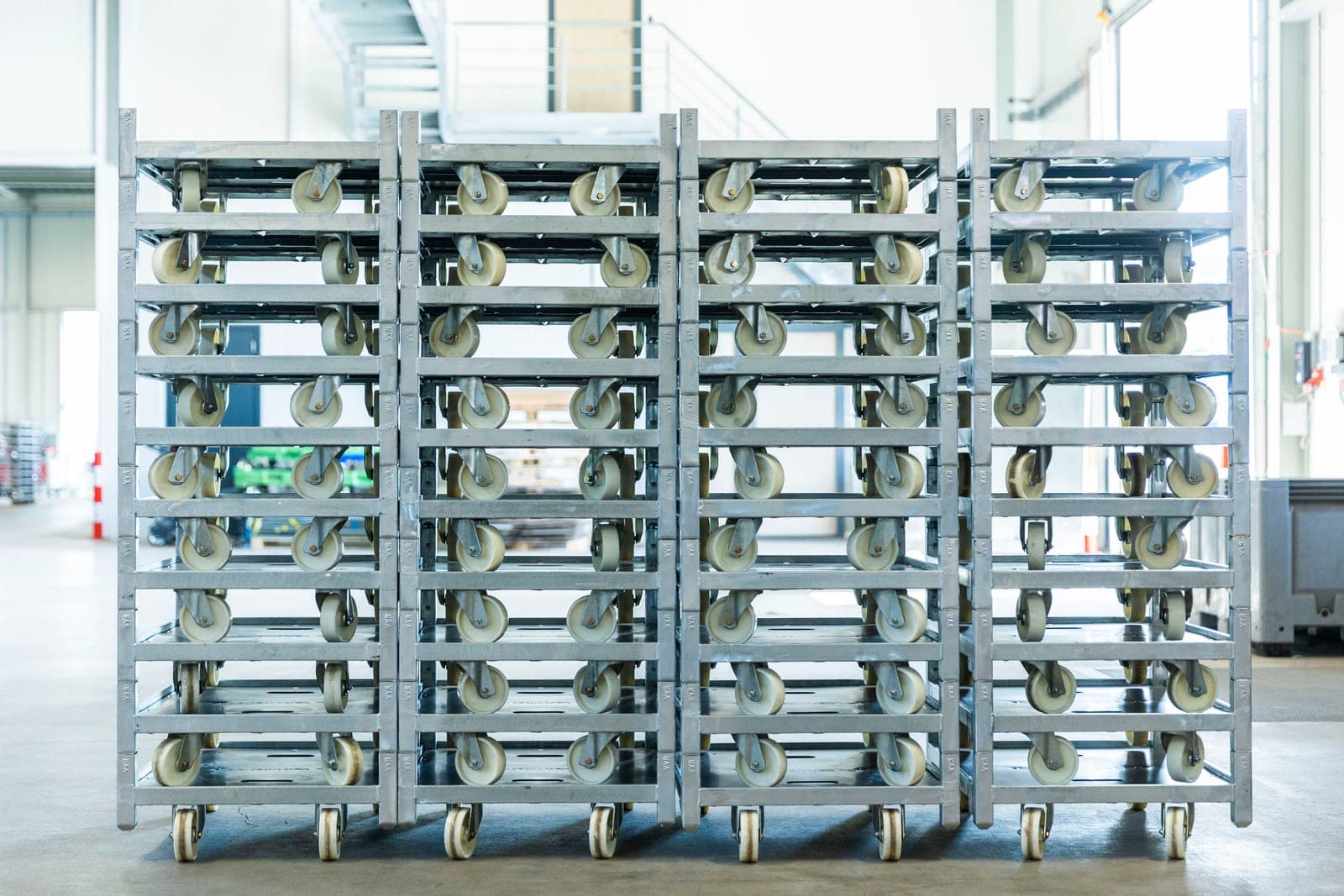
A concrete example from e-fulfilment is Picnic. For grocery delivery, we developed a reusable load carrier together with Picnic, designed with an FEM analysis to optimally balance strength and weight. The carrier is built to circulate again and again through the delivery chain and scales along with the growth of the operation.
Because it is a reusable system, the solution falls outside the 50% empty-space rule and contributes to the reuse targets. This shows how you can turn a packaging obligation into an operational advantage: less single-use material, lower waste streams and packaging tailored to the actual logistics.
Read the Picnic case arrow_forward
Steps for online shops and retailers
The substantive requirements only start in 2030, but preparation begins now. These steps help you get going:
- Map your packaging portfolio: which box and packaging formats do you use, and in what volumes?
- Test your shipping and grouped packaging against the 50% empty-space rule and reduce the format where possible.
- Assess the recyclability of your packaging and anticipate modulated EPR contributions.
- Identify fixed flows in your chain that lend themselves to a reusable system.
- Make sure your registration and producer obligations are in order before 12 August 2026.
Want to know which solution fits your shipping and grouped packaging? Explore our approach and think it through with us, no strings attached.
Explore our solution arrow_forward
Stay up to date on the latest PPWR developments and what they mean for your sector. Sign up for our newsletter.