
What is the PPWR?
PPWR stands for Packaging and Packaging Waste Regulation and is formally set out as Regulation (EU) 2025/40. It is the new European law that sets requirements for packaging and packaging waste: from how recyclable packaging must be to how much material and empty space is still allowed. The regulation entered into force on 11 February 2025 and generally applies from 12 August 2026. Its aim is to make packaging more sustainable across the whole EU and to bring the internal market into line.
When does the PPWR apply?
An important point: although the PPWR applies from 12 August 2026, most of the concrete requirements only take effect later. Around 2026 the focus is mainly on requirements for hazardous substances, such as the sum limit for heavy metals and the PFAS restriction for food-contact packaging (Art. 5), plus the broader producer and registration structure.
The major substantive requirements follow on 1 January 2030: recyclability (Art. 6), packaging minimisation (Art. 10), the rule that packaging may contain no more than 50% empty space (Art. 11), a ban on certain packaging formats (Art. 25), requirements for recycled content (Art. 7) and the reuse targets (Art. 29). Mandatory labels on packaging (Art. 12) apply from 12 August 2028, and from 2038 only packaging in recyclability class A or B will be permitted.
Why a regulation and not a directive?
The PPWR replaces the old Packaging Directive 94/62/EC. The difference lies in the legal form. A directive first has to be transposed into national law by each member state, which led to differences between countries. A regulation, by contrast, applies directly in all EU member states, without national transposition. For businesses operating in several EU countries this means one set of rules instead of 27 variations.
The key points at a glance
- The PPWR is Regulation (EU) 2025/40, applicable from 12 August 2026, with most substantive requirements from 1 January 2030.
- All packaging must eventually be recyclable; from 2038 only the better recyclability classes A and B will be allowed.
- There will be requirements for minimisation and a maximum of 50% empty space; reusable packaging is exempt from that empty-space rule.
- Binding reuse targets apply for 2030: 40% for cross-border transport packaging and 10% for grouped packaging.
- The 2040 targets (70% and 25%) are aspirational targets and best-effort obligations, not binding.
- Cardboard boxes are excluded from the 40% transport reuse target (Art. 29(4)(d)).
What does the PPWR mean for your business?
The PPWR does not ban cardboard and does not directly force reuse. The pressure on less sustainable packaging is mainly indirect. For example, EPR fees (the costs producers pay for packaging waste) are modulated on recyclability class: poorly recyclable packaging therefore becomes more expensive than well-recyclable packaging. On top of that come the requirements for recycled content and minimisation. The combined effect is that the costs and requirements around single-use, hard-to-recycle packaging keep rising.
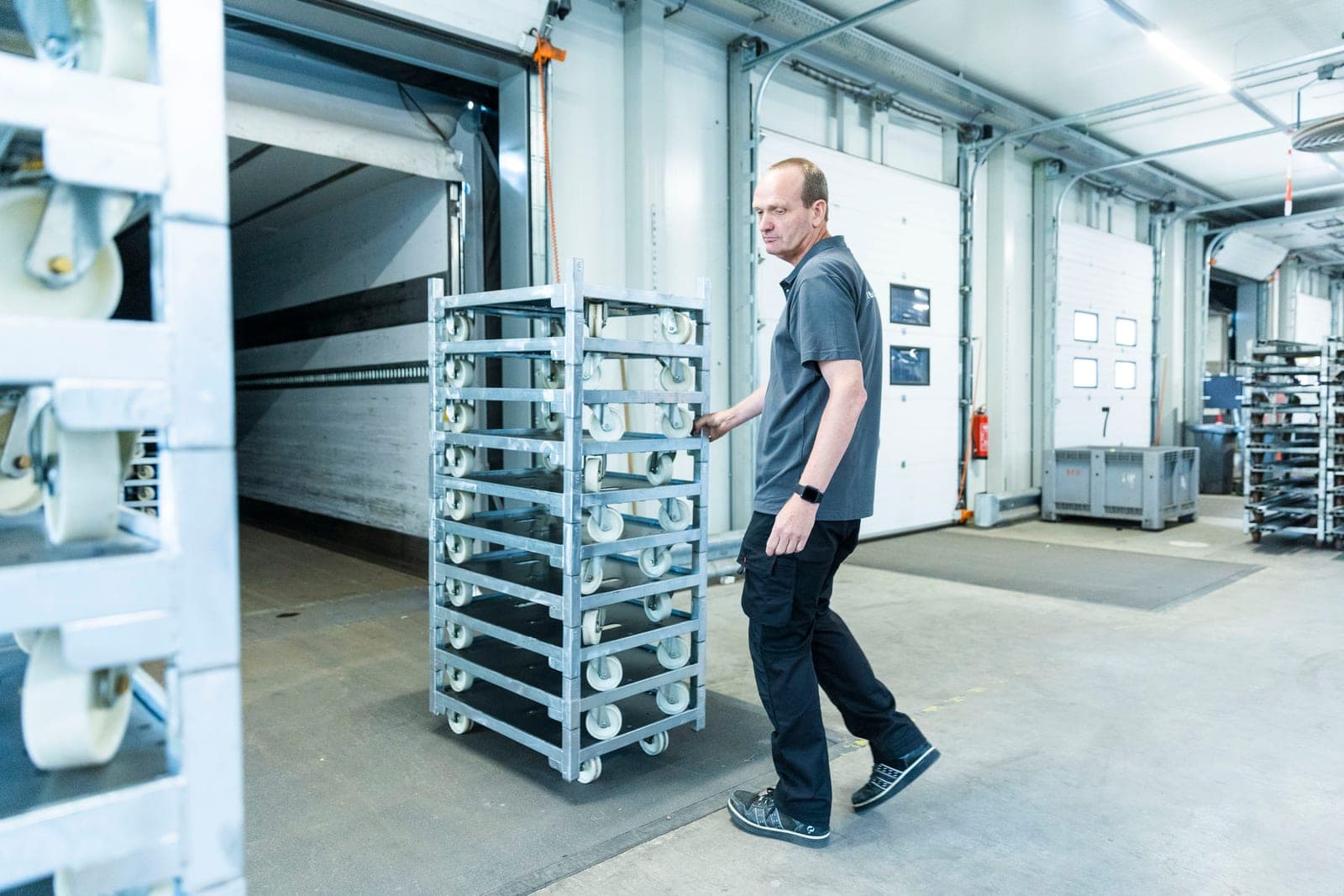
As a result, reusable transport becomes more attractive for many businesses. Reusable packaging falls outside the 50% empty-space rule and counts towards the reuse targets. For businesses with many cross-border transport flows, it pays to start looking now at where reuse makes sense logistically and financially.
Explore our reusable transport solutions arrow_forward
How to get started
Start by mapping out which packaging you currently use and in which flows. Then look at which of these are vulnerable under the new requirements: poorly recyclable, lots of empty space, or a lot of single-use material in transport. On that basis you can prioritise where reuse or adjustment delivers the most value, well before the 2030 requirements take effect. That way you turn the PPWR from a last-minute obligation into a planned transition.
Curious how other companies are approaching this? See how we set up reusable transport together with Hoek Flowers.
Read the Hoek Flowers case arrow_forward
Want to keep following the PPWR developments? Sign up for our newsletter and receive practical updates on the legislation and reusable transport.