
Which floriculture packaging falls under the PPWR?
The PPWR is Regulation (EU) 2025/40. It entered into force on 11 February 2025 and applies generally from 12 August 2026. It covers all packaging placed on the EU market, and the floriculture chain is no exception. The regulation contains no floriculture-specific exemptions.
In practice this means that virtually every layer of packaging around flowers and plants falls within scope. Think of:
- Export boxes (sales and shipping packaging, usually cardboard)
- Trays and crates in which bunches and potted plants are transported
- Sleeves and wraps around bunches of flowers and plants
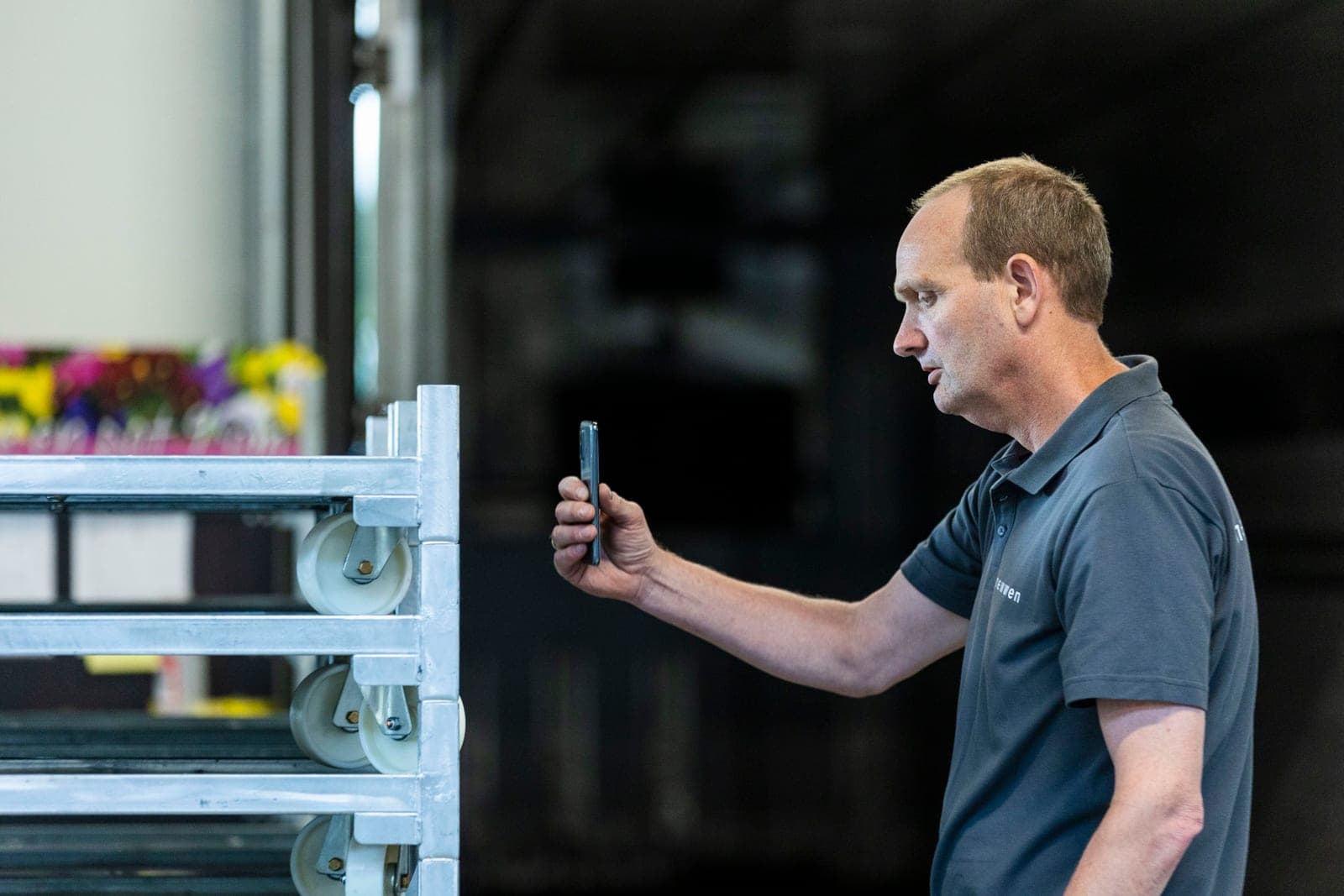
- Transport and load carriers such as trolleys and CC containers
Important to know: packaging types are assessed separately. Each type requires its own declaration of conformity and recyclability assessment. An export box is therefore assessed independently of the tray or the sleeve; there is no combined assessment for the chain as a whole.
What changes, and when?
It is wise to distinguish between the date on which the regulation becomes applicable and the dates on which the concrete material requirements take effect. The PPWR applies from 12 August 2026, but most substantive requirements come later.
- 12 August 2026: the PPWR becomes generally applicable
- 12 August 2028: the labelling requirements for packaging take effect
- 1 January 2030: the bulk of the material requirements enter into force, including recyclability, packaging minimisation, the 50% empty-space rule, reuse targets and mandatory recycled content
For floriculture businesses this means that 2026 is above all a year of preparation and stocktaking, while 2030 is the year in which the requirements on the packaging itself really start to bite. Companies that begin now to map which packaging is used where will be in a considerably stronger position later.
The reuse direction for transport packaging
One of the core elements of the PPWR is the reuse targets for transport packaging. For cross-border transport within the EU, a binding target of 40% reusable transport packaging applies from 2030. For 2040 an aspirational target of 70% is included, but that is explicitly non-binding. Grouped packaging is subject to lower percentages: 10% in 2030 and an aspirational 25% in 2040.
For floriculture there is one nuance that is often misunderstood. Cardboard (export) boxes are explicitly excluded from the 40% transport reuse target (Article 29(4)(d)). The PPWR therefore does not ban cardboard, nor does it oblige businesses to replace cardboard with reusable boxes. The pressure on cardboard is indirect: through modulated EPR fees based on recyclability, recycled content and minimisation, and through the 50% empty-space rule.
What is clear, however, is the direction of the legislation. Reusable export boxes and load carriers align with where the PPWR is heading. Moreover, reusable packaging is exempt from the 50% empty-space rule. Companies already working with reusable systems are therefore ahead of the curve: not because it is legally required, but because it is an opportunity to reduce costs, material use and future regulatory pressure at the same time.
In practice: how Hoek Flowers already did this
Hoek Flowers shows that the reuse direction need not remain theory. For flower exports the company developed a reusable, traceable export box fitted with RFID tags. The box replaces the single-use cardboard export box and lasts for many rotations.
Thanks to RFID tracing, Hoek Flowers knows exactly where each box is within the chain, which keeps the return and rotation process manageable. This makes reuse not only more sustainable but also logistically workable. It is a concrete example of how a floriculture business gets ahead of the PPWR's direction, without being legally obliged to do so.
Read the Hoek Flowers case arrow_forward
First steps for horticulture businesses
You do not have to wait until 2030 to get started. The wisest first steps are precisely the ones to take now:
- Take stock of all your packaging by type: export boxes, trays, wraps, sleeves and load carriers
- Assess each type for recyclability, recycled content and degree of minimisation
- Map which packaging involves cross-border transport, with an eye on the 2030 reuse targets
- Explore where reusable systems (boxes, load carriers) can save costs and material
- Note the labelling requirements that already apply from 12 August 2028
By assessing packaging type by type and following the timeline, the PPWR turns from an abstract obligation into a concrete plan. Would you like to know how reusable, traceable packaging fits into your chain?
See our solution for floriculture arrow_forward
Would you like to stay informed about what the PPWR means for floriculture? Sign up for our newsletter and receive practical updates on regulations and applications.