
Picnic: een sterkere, stapelbare ladingdrager voor supersnelle groei
Picnic bouwde een unieke, uiterst efficiënte supply chain — grotendeels zelf ontwikkeld. Voor de volgende stap vroegen ze Van Vliet & Newwen: ontwerp een ladingdrager die geschikt is voor geautomatiseerde fulfilment én bestand is tegen de dagelijkse praktijk.
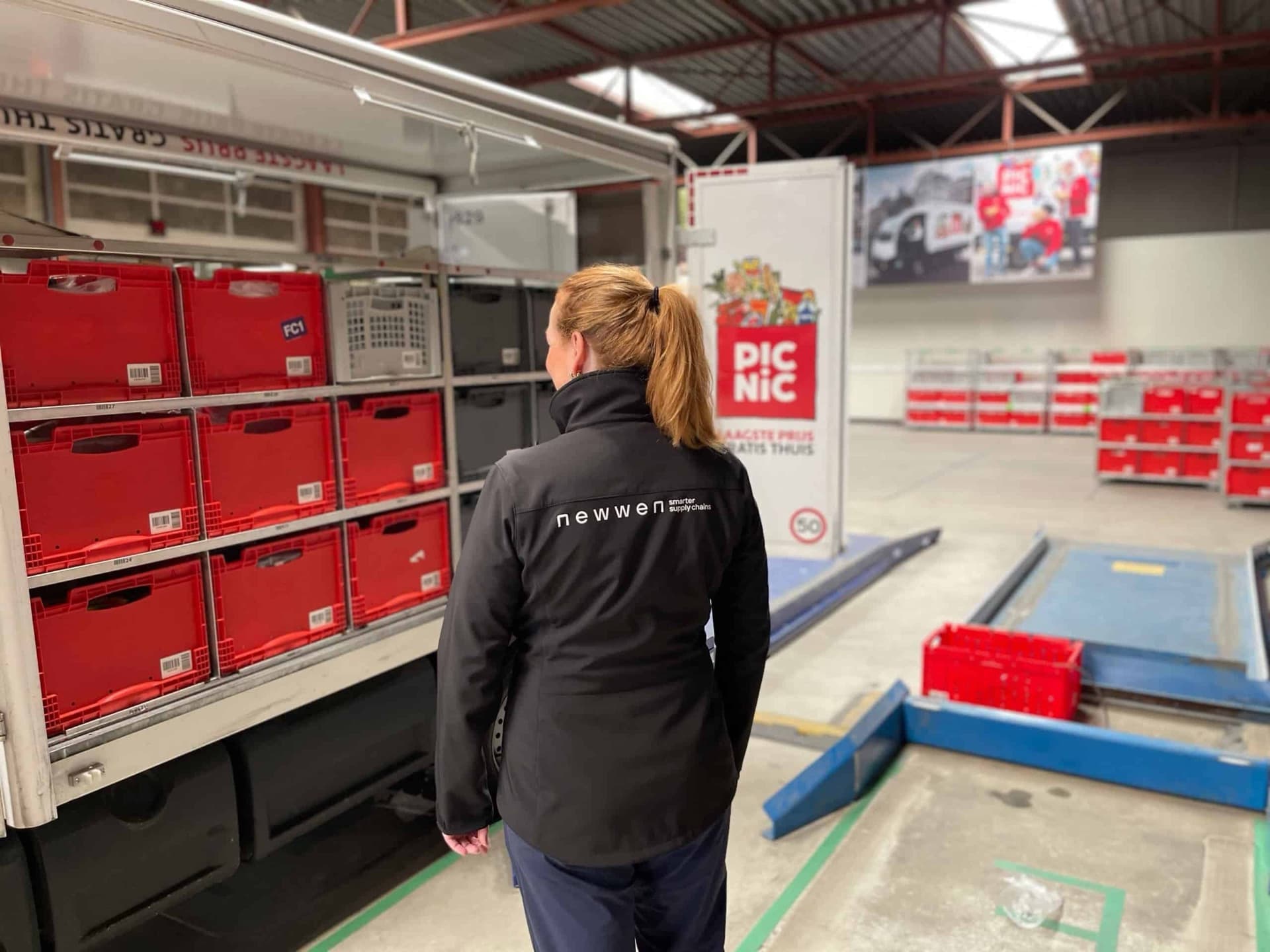
Meegroeien met een razendsnelle bezorgketen
Picnic groeit hard: ruim 2.500 kleine elektrische bezorgbusjes, bezorging in 120 steden, 70 hubs en 15+ fulfilmentcentra in Nederland, Frankrijk en Duitsland. De bestaande rekken (100% aluminium met een V-versteviging, van een andere partner) misten de stabiliteit die deze schaal en automatisering vragen.
Picnic stelde twee vragen aan Van Vliet & Newwen: kunnen jullie een rek ontwerpen dat geschikt is voor geautomatiseerde magazijnprocessen? En hoe garanderen we sterkte en duurzaamheid?
Ontworpen met simulaties, gebouwd voor de praktijk
Grondig R&D-traject
Samen met Picnic doorliepen we een uitgebreid ontwikkeltraject, inclusief FEM-analyse (Finite Element Method) en simulatiemodellen om te voorspellen hoe het rek reageert op krachten uit de echte wereld.
Het ontwerp
- engineeringRekken van staal én aluminium met gecentreerde, gewogen steunpunten op de hoeken.
- fitness_centerEven sterk en duurzaam als de eerdere diagonale constructie — maar stabieler.
- stacksStapelbaar, om logistieke ruimte te besparen.
- precision_manufacturingGeschikt voor geautomatiseerde magazijnprocessen.
“Newwen is een echte hands-on partner die effectief met ons samenwerkte tijdens ons R&D-traject.”
— Michiel Muller, CEO PicnicMeer productiviteit, in drie landen
Het slimme, herbruikbare ontwerp verhoogt de productiviteit van medewerkers, voertuigen, hubs en fulfilmentcentra. De dragers zijn stapelbaar en poolbaar — een gesloten-loop systeem dat ruimte én verspilling bespaart. Van Vliet & Newwen levert de oplossingen inmiddels in drie landen en geldt voor Picnic als samenwerkings-, ontwikkel- én innovatiepartner.
Herbruik als standaard
Poolbare, herbruikbare ladingdragers in een gesloten-loop zijn precies het model dat de PPWR met de hergebruik-doelen voor transportverpakking stimuleert (40% in 2030, 70% in 2040). Wie zo werkt, bouwt nu al aan een PPWR-proof keten.